Sinq
A construction variation management SaaS. The variation was done. The documentation was not. That gap is where firms lose revenue they have earned. Sinq closes it. React Native mobile capture, React.js commercial workflow, real-time financial dashboard, and client approval integration. Node.js, MongoDB. 4 months.
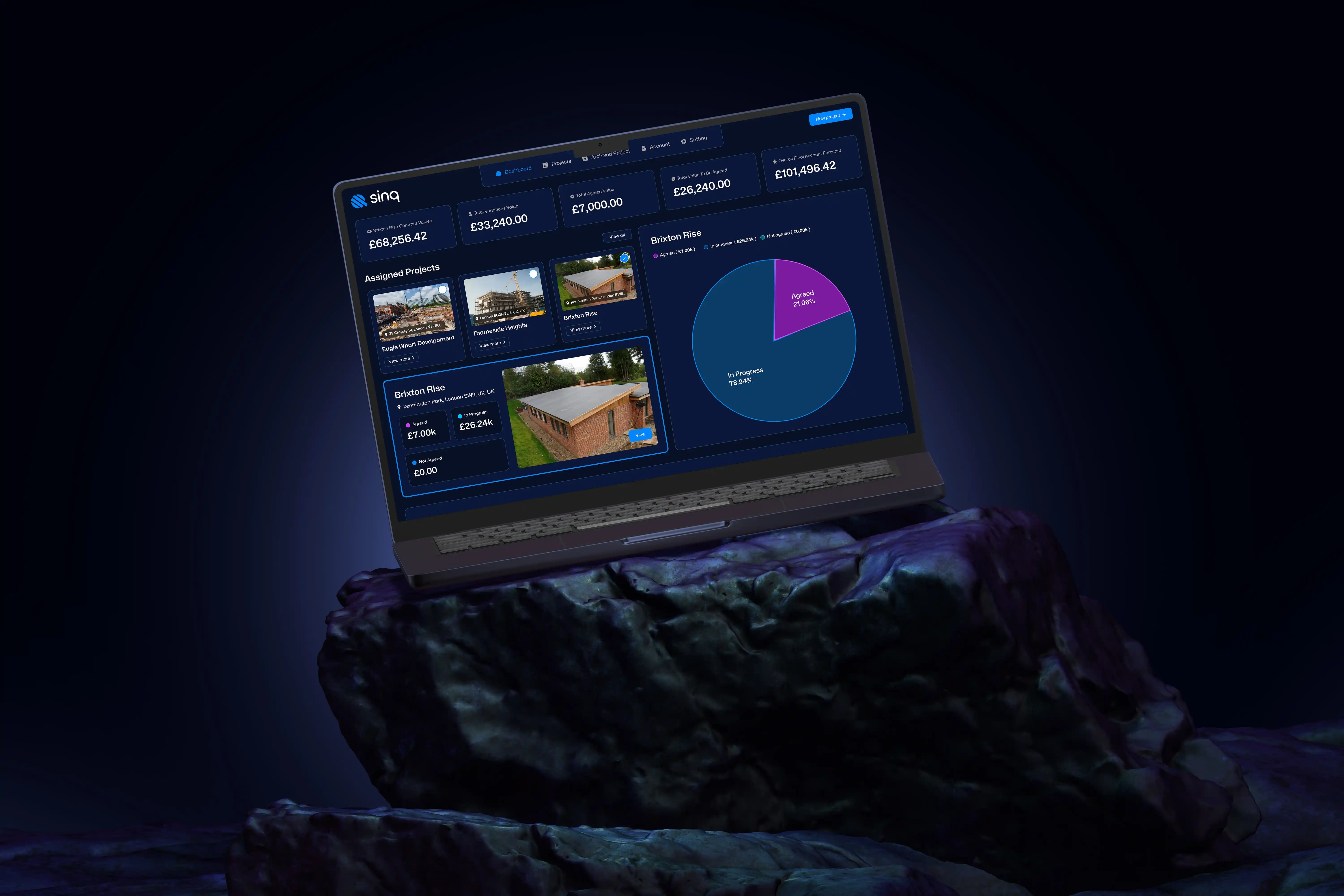
What We Delivered
The Situation
In construction, variation management is where revenue is protected or lost. A variation is a change to contracted scope. Something happens on site that was not in the original contract. The work gets done. The documentation does not. And at final account, the contractor sits across from the client and hears the question that costs more than any single variation: "Can you provide contemporaneous documentation for this one?"
-
Revenue leakage through documentation failure
Construction firms lose recoverable revenue because variations are not documented with the discipline the final account demands. The work was done. The evidence was not captured. The revenue was earned and then lost.
-
Site-to-office gap
Variations happen on site. Financial management happens in the office. The gap between where the work occurs and where the documentation is processed is where evidence gets lost, details get forgotten, and contemporaneous records become reconstructed memories.
-
No real-time financial visibility
Project managers cannot see total variation exposure without manual aggregation from spreadsheets. The commercial picture is always out of date. Decisions about which variations to prioritise for submission are made with incomplete information.
-
Client approval friction
Sign-off through email chains creates delays that compound across every variation. A client who finds the approval process burdensome approves more slowly. Slow approvals delay revenue recognition.
-
No purpose-built tool
Generic PM software treats variation management as a feature, not a workflow. The specific sequence of site capture, commercial processing, client approval, and financial visibility requires a system designed for that sequence.
The variation was done. The documentation was not. That gap is where firms lose revenue they have earned. Every variation that reaches final account without contemporaneous evidence is revenue the contractor must argue for instead of prove.
The Approach
Phase 1
Product Strategy and Variation Workflow Design
Before a line of code was written, Empyreal mapped the complete variation management workflow from the moment a scope change occurs on site to the moment the client approves it.
Site-to-settlement workflow mappingEvery stage of the variation lifecycle mapped. Site capture. Commercial processing. Documentation assembly. Client submission. Approval tracking. Financial recording. Each stage identified as a point where revenue protection either holds or fails.
Mobile-first site captureThe site manager who identifies a scope change needs to capture it in under two minutes, in site conditions, with photographs and enough detail for the commercial team to price it accurately. The mobile capture was designed for speed, simplicity, and the specific conditions of a construction site. Gloves. Rain. Time pressure.
Client approval designed for client convenienceThe approval interface built to serve the client's experience as much as the contractor's. A client who finds variation approval burdensome approves more slowly. Secure unique links. Structured submissions. Clear approval options. No account required. The approval process that feels effortless produces faster approvals.
Phase 2
Platform Development
React Native for mobile site capture. React.js for the commercial web platform. Node.js with MongoDB backend. SaaS architecture for multi-tenant deployment.
React Native mobile appSite managers capture variations in under two minutes. Description, photographs, location, and initial assessment. The variation record exists from the moment the scope change is identified, not from the moment someone in the office remembers to document it.
React.js commercial platformThe commercial team receives structured variation records from site, prices them, attaches supporting documentation, and submits to clients. The workflow that used to require manual aggregation from site notes, emails, and phone calls now flows through a single system.
Real-time financial dashboardContract value, approved variation revenue, pending submissions, captured but unsubmitted, and disputed amounts. All visible in real time. The commercial director who needed end-of-month spreadsheet aggregation now has a live picture of variation exposure across the project portfolio.
SaaS multi-tenancyComplete data isolation between contractor organisations. Rapid onboarding. Consistent workflow across all projects and teams within an organisation.
The Numbers
The final account meeting does not sound the same anymore. "Can you provide contemporaneous documentation for this one?" Yes. Here it is. Captured on site. Timestamped. Photographed. Approved by the client through the platform. The variation was done. Now the documentation is too.
Mohit's Take
"The insight that shaped everything: variation management is a financial workflow, not a project management feature. Generic PM tools treat variations as tasks. Sinq treats them as revenue. That distinction determined the architecture, the mobile capture design, the financial dashboard, and the client approval flow. Every decision flowed from understanding that a variation is money the contractor has earned and must now protect through documentation. The system that captures it contemporaneously protects it. The system that reconstructs it later risks it."
— Mohit Ramani, Founder & Lead Architect, Empyreal Infotech
Tech Stack
The toolchain behind Sinq.
Start a Conversation About Your Product
You have a portfolio of active projects and a variation management workflow that is costing you revenue you have earned. The question is how much of that revenue is recoverable with a system built to capture it correctly from the moment the scope changes on site.
A discovery call with Empyreal is thirty minutes. We will ask about your current variation management process, the points where capture and approval are failing, and the scale of variation exposure across your active projects. We will tell you honestly how Sinq addresses those specific failure points.