Second Date
A dating app UX redesign that rebuilt the matching logic from the emotional journey outward. Not a visual refresh. A structural rethinking of how connection happens on screen. Figma. 4 weeks.
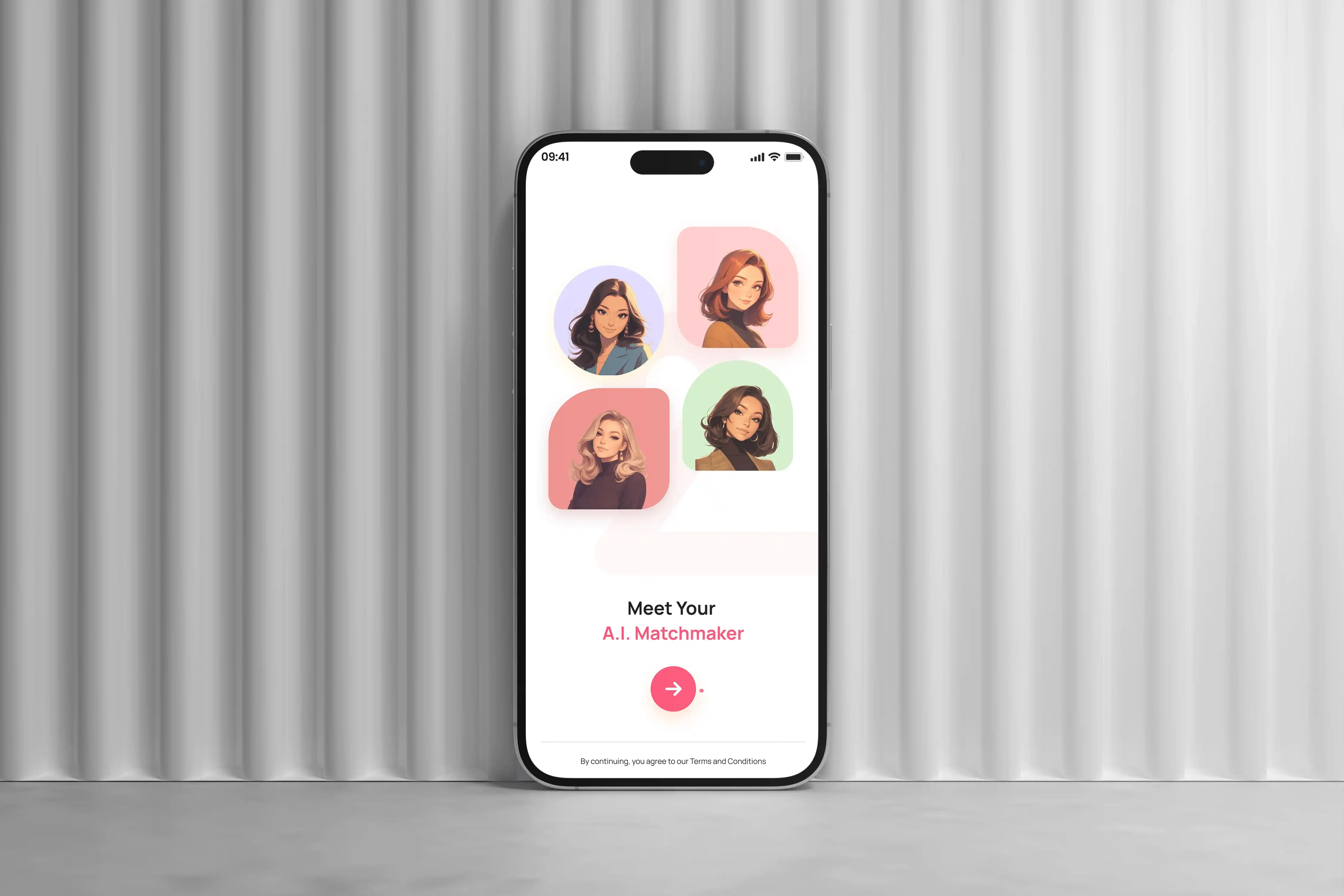
What We Delivered
The Situation
The swipe model is not broken because of how it looks. It is broken because of what it does to the person using it. The speed that makes swiping feel easy is the same speed that makes every person on screen feel disposable. The infinite supply of options creates not abundance but anxiety. Second Date's founder understood this from the inside. They came to Empyreal not with a brief to build a better-looking version, but with a conviction: that a dating platform designed around intentionality would produce genuinely different outcomes.
-
Decision fatigue from unguided choice
The swipe model presents an undifferentiated stream with minimal compatibility context. Users make dozens of micro-decisions with almost no relevant information. The cognitive cost accumulates into a fatigue that makes the app feel like work.
-
Low trust from shallow profiles
When a profile is a handful of photos and a two-line bio, users have no basis for trust. The interaction that follows a match has no foundation because the match itself was made with almost nothing to hold onto.
-
No emotional journey design
Most dating apps treat the experience as a transaction: find a match, initiate contact. The emotional reality of the user, the hope, the vulnerability involved in presenting yourself to strangers, is almost entirely unacknowledged in the interface.
-
Visual language mismatch
The existing UI sounded like every other dating app. The brand positioning called for something warmer, more distinctive, more considered.
The app worked technically. It failed emotionally. The visual was not the problem. The logic was the problem.
The Approach
Phase 1
UX Research and Emotional Logic
The research phase focused on a specific question: what does a user who is looking for meaningful connection actually need to feel at each stage of the matchmaking experience?
Experience failure analysisMapped every point where existing dating apps condition users toward volume over quality. Identified the specific UX patterns that create decision fatigue, erode trust, and train users to treat other people as disposable options.
Emotional journey mappingEvery transition between sections designed around what the user is feeling at that moment. The move from compatibility flow to match discovery. The moment where a user decides to reach out. Each one a design decision reflecting the emotional reality of what is happening.
Three structural decisions resolved before wireframesFirst, onboarding must establish the platform's intention from the first interaction, not just collect profile data. Second, the compatibility framework must be structural, not cosmetic. Third, match discovery must be curated rather than streamed, sacrificing the engagement metric the swipe model optimised for.
Phase 2
UI Redesign in Figma
Complete visual and interaction redesign addressing every identified friction point, with the emotional logic driving every pixel.
Personality-based compatibility flowNot a survey. Not a quiz. An exploration of who the user is, designed so the act of self-expression feels natural rather than clinical. The visual design signals psychological safety. Whatever the user shares here will be received thoughtfully.
Curated match discoveryThe shift from a swipe stream to a curated set. Fewer matches, presented with more context, more intentionality. Think of the difference between browsing a market stall and being shown three objects by someone who has carefully selected them for you. Every design decision in the match section served that argument.
Onboarding flow redesignProfile creation restructured to feel like self-expression rather than form-filling. By step five in the original design, users had spent enough effort that remaining steps felt like a demand rather than an invitation. That accumulated friction was the most valuable finding.
Design system creationComplete component library and design tokens for visual consistency as the product scales. Built as reusable components designed around specific user journey moments, not just screen states.
The Numbers
The redesign addressed every identified friction point. Not a concept deck. A development-ready Figma prototype a developer can build from without interpretation.
Mohit's Take
"The most valuable finding was not a broken screen. It was accumulated friction across the onboarding flow. No single step was the problem. But by step five, users had spent enough effort that remaining steps felt like a demand rather than an invitation. That is the kind of insight you only hear when you listen to the experience as the user feels it, not as the flow chart describes it. We also had to hold the line on curated matching over streaming, even when it meant consciously sacrificing the engagement metric the swipe model was optimised for. That conversation with the client was the moment the product found its identity."
— Mohit Ramani, Founder & Lead Architect, Empyreal Infotech
Tech Stack
The toolchain behind the Second Date redesign.
Start a Conversation About Your Product
You have a vision for a dating or connection platform that is genuinely different from what already exists. The question is whether the design team you work with will understand why it is different and will make design decisions that preserve that difference, rather than smoothing it into something more familiar.
A discovery call with Empyreal is thirty minutes. You describe the experience you are trying to create. Empyreal listens, asks the questions about your users' emotional reality, and tells you honestly how the design process would work.