Save Minds
A patient health management platform where every technical decision is a patient safety decision. Clinical workflows, health-grade data architecture, and privacy built from the data layer outward. React.js, Node.js, MongoDB. 6 months.
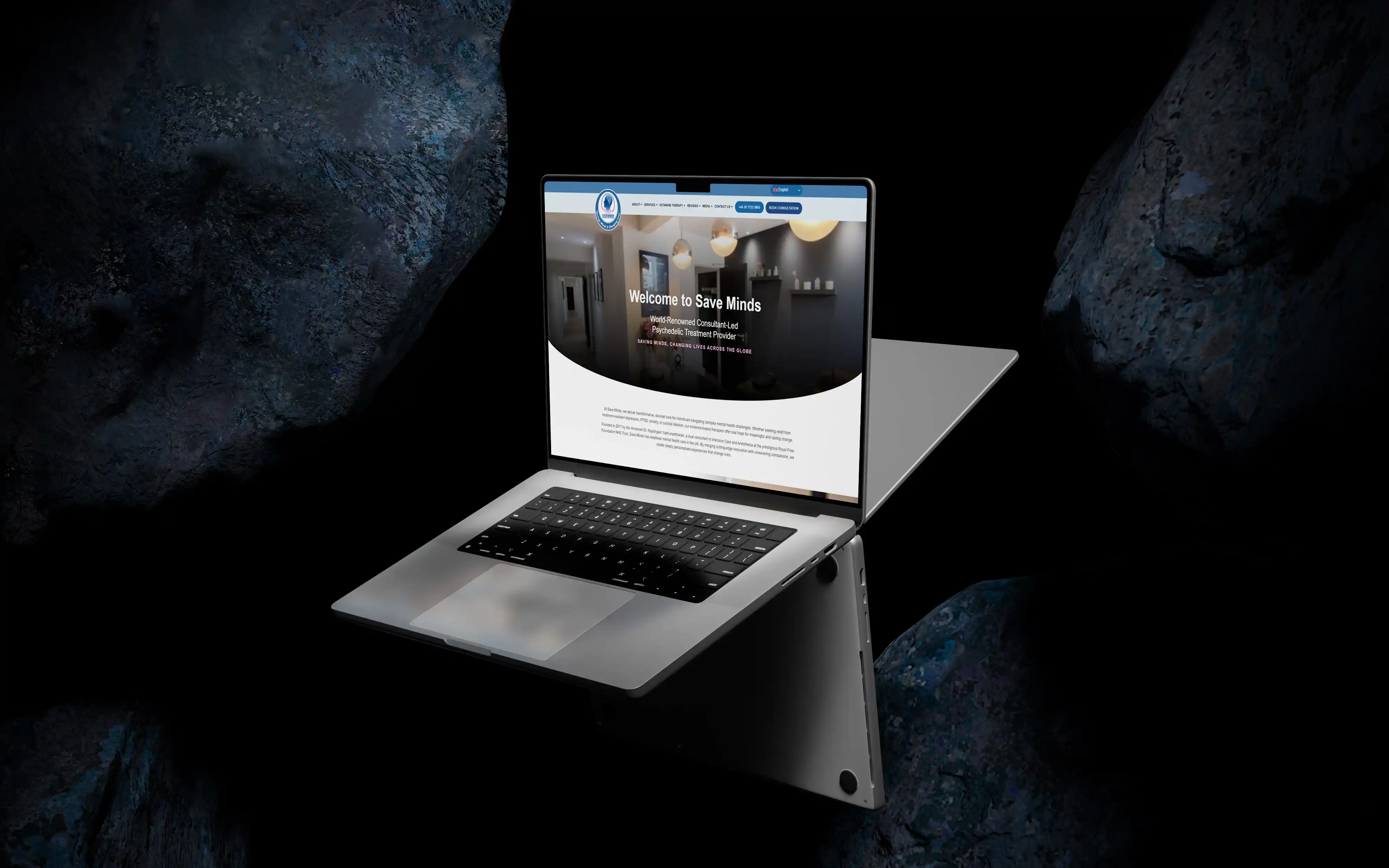
What We Delivered
The Situation
Health platforms teach you something other categories do not: every technical decision is a patient safety decision. The database schema determines what can be lost. The access control determines who sees what. The error handling determines whether a clinician trusts the system enough to rely on it during a session.
-
Health data privacy beyond standard security
Patient data requires privacy standards beyond standard application security. Every interaction auditable. Every access controlled and logged. The data architecture is not just a technical choice. It is a commitment to the people whose information the system holds.
-
Clinical workflow complexity
Multiple practitioners, treatment stages, documentation requirements, and patient histories. All flowing through a system that must never create friction at the moment a clinician is caring for a patient. A slow system during a clinical session is not a UX problem. It is a care problem.
-
Accuracy as a safety requirement
In patient health management, data accuracy is not a quality metric. It is a safety requirement. Every input, every display, every calculation must be correct. The margin for error is not small. It is zero.
In health platforms, the data architecture is the product. Privacy, accuracy, and access control are not features. They are the foundation everything else depends on.
The Approach
Phase 1
Safety-First Architecture Design
Before any feature was built, the safety and privacy architecture was defined. What patient data must be captured, how it must be protected, who can access it, and under what conditions.
Health-grade data architectureMongoDB structure designed from patient privacy requirements outward. Every record auditable. Every access logged. Data isolation between practitioners enforced at the database level, not the application level. The safety is in the architecture, not in the policy.
Clinical workflow mappingTreatment stages, documentation requirements, and practitioner interactions mapped before screens were designed. The workflow that a clinician follows during a session must feel natural, not like a system is being operated. The technology must be invisible enough that the practitioner's attention stays with the patient.
Access control architectureRole-based access with granular permissions. Practitioners see what they need to see. Administrators see what they need to manage. Patient data visible only to those with authorised access. Every permission decision auditable.
Phase 2
React.js Frontend and Node.js Backend
React.js for clinical-grade interface quality. Node.js with MongoDB for health data management.
React.js clinical interfacePatient records, treatment workflows, documentation capture, and clinical dashboards. Each screen designed for the information density clinicians need without the cognitive overload that causes errors. Speed and accuracy balanced at every interaction.
Node.js health data backendPatient records, treatment histories, practitioner notes, and clinical documentation. Managed with the completeness and accuracy health data demands. Every write operation validated. Every read operation authorised.
Reporting and clinical documentationTreatment progress, session notes, and patient outcomes captured and presented in formats useful for clinical review and continuity of care.
The Numbers
Save Minds launched as a patient health management platform where safety is in the architecture, not in the policy. Every technical decision reflects the responsibility of holding patient data.
Mohit's Take
"Health platforms teach you that every technical decision is a patient safety decision. The database schema determines what can be lost. The access control determines who sees what. The error handling determines whether a clinician trusts the data enough to act on it. We built safety architecture first and features on top. In healthcare, that is the only sequence that produces a system clinicians will rely on. Any other sequence produces a system they work around."
— Mohit Ramani, Founder & Lead Architect, Empyreal Infotech
Tech Stack
The toolchain behind the Save Minds platform.
Start a Conversation About Your Product
You are building a health platform where the data architecture carries the responsibility of patient safety. The question is whether the technical decisions are being made with that responsibility at the centre, or whether safety is being treated as a feature to be added later.
A discovery call with Empyreal is thirty minutes. You describe the health platform. Empyreal listens, identifies the safety architecture requirements, and tells you honestly what building it correctly from the foundation requires.