Ride Rove
An enterprise taxi platform backend. Multi-service ride management, real-time dispatch, driver and fleet management, and payment infrastructure built for the kind of operational pressure where two seconds of lag breaks the entire experience.
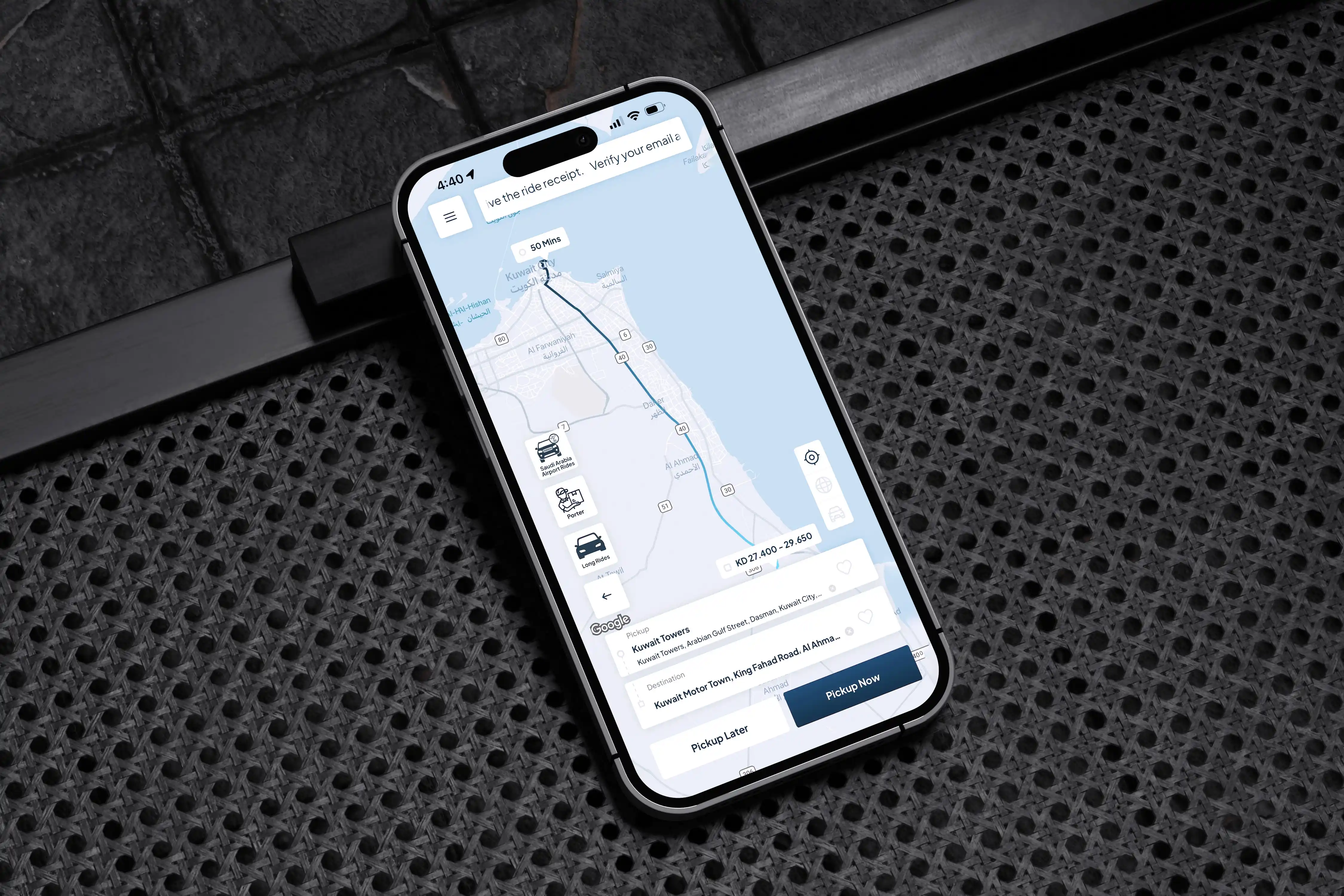
What We Delivered
The Situation
A ride-hailing platform is not a CRUD application. It is an operations system where everything must work together in real time or nothing works at all. The dispatch engine, the payment processing, the driver locations, the passenger ETAs. One component lagging by two seconds and the passenger feels it before they can articulate what went wrong.
-
Real-time dispatch complexity
Matching passengers with drivers across multiple service types, with accurate ETAs and pricing that reflects the actual conditions on the ground, not the conditions three seconds ago.
-
Multi-service architecture
Different ride types with different pricing models, vehicle requirements, and operational rules, all flowing through a single backend that cannot treat them as separate products.
-
Driver and fleet management at scale
Onboarding, verification, earnings tracking, availability management, and fleet operations for a growing driver network. Every driver expects the system to feel fast and fair.
-
Payment infrastructure with multiple methods
Fare calculation, multiple payment methods, driver payouts, and financial reporting. The payment layer is where trust lives. A driver who waits an extra day for a payout talks to other drivers.
A ride-hailing backend sounds like a routing problem. It is actually an orchestration problem. Every component must perform in concert, in real time, under load.
The Approach
Phase 1
Backend Architecture and Real-Time Engine
CodeIgniter PHP backend with MySQL, designed for transactional volume and the real-time dispatch demands of a multi-service ride platform.
Dispatch engineReal-time matching connecting ride requests with available drivers based on proximity, service type, availability, and vehicle capability. The matching logic accounts for conditions that change by the second. A driver who was closest five seconds ago may not be closest now.
MySQL relational schemaRides, drivers, passengers, payments, vehicle registrations, service types, all held in referential integrity. The schema had to handle concurrent writes from hundreds of active rides without contention becoming visible to users.
Multi-service business rulesDifferent ride types carry different pricing models, surge logic, and vehicle requirements. The business rules engine manages this complexity without the passenger or driver feeling the system hesitate.
Phase 2
Native Mobile Apps
Native Android (Java) and iOS (Objective-C) apps for both passengers and drivers. Four apps, each optimised for its specific user and their specific needs.
Passenger appsRide booking, real-time tracking of the approaching driver, fare estimation before commitment, and payment processing that completes before the passenger steps out of the vehicle. The experience must feel effortless. The engineering behind that effortlessness is considerable.
Driver appsRide acceptance with enough context to make a quick decision, turn-by-turn navigation, earnings tracking visible in real time, and availability management. A driver's relationship with the platform lives in this app. It needs to feel like a reliable partner, not an unreliable boss.
Phase 3
Admin Dashboard and Fleet Operations
Next.js admin dashboard providing the operational visibility that a growing fleet demands.
Fleet managementDriver verification status, vehicle documentation, active fleet monitoring, and performance metrics. The operations team sees the entire fleet as a living system, not a list of names.
Financial reportingRide revenue, driver payouts, commission calculations, and payment reconciliation. The numbers must be accurate and available without manual aggregation. A business scaling its fleet cannot wait for end-of-month spreadsheets.
The Numbers
Ride Rove launched as a complete enterprise ride management platform where every component works in real time because the architecture treats real-time as a system property, not a feature.
Mohit's Take
"Everything has to work together in real time or nothing works. The dispatch engine, payments, driver locations, passenger ETAs. One component lagging by two seconds creates a broken experience the user feels instantly but cannot diagnose. The architecture had to treat real-time as a system property, not an individual feature. We built the dispatch engine to handle concurrent matching across multiple service types without any single request waiting for another to resolve. That concurrency model is invisible to the user. It is also the reason the system feels fast."
— Mohit Ramani, Founder & Lead Architect, Empyreal Infotech
Tech Stack
The toolchain behind the Ride Rove platform.
Start a Conversation About Your Product
You are building a platform where real-time operations determine whether users trust the system or abandon it. The question is whether the architecture treats real-time as a system property or bolts it on as a feature.
A discovery call with Empyreal is thirty minutes. You describe the operational demands. Empyreal listens, identifies where latency will break trust, and tells you honestly what the architecture requires.