One Oak
An investment platform onboarding redesign. The original asked users to trust it with their money before giving them any reason to. The redesign changed the sequence. Figma. 4 weeks.
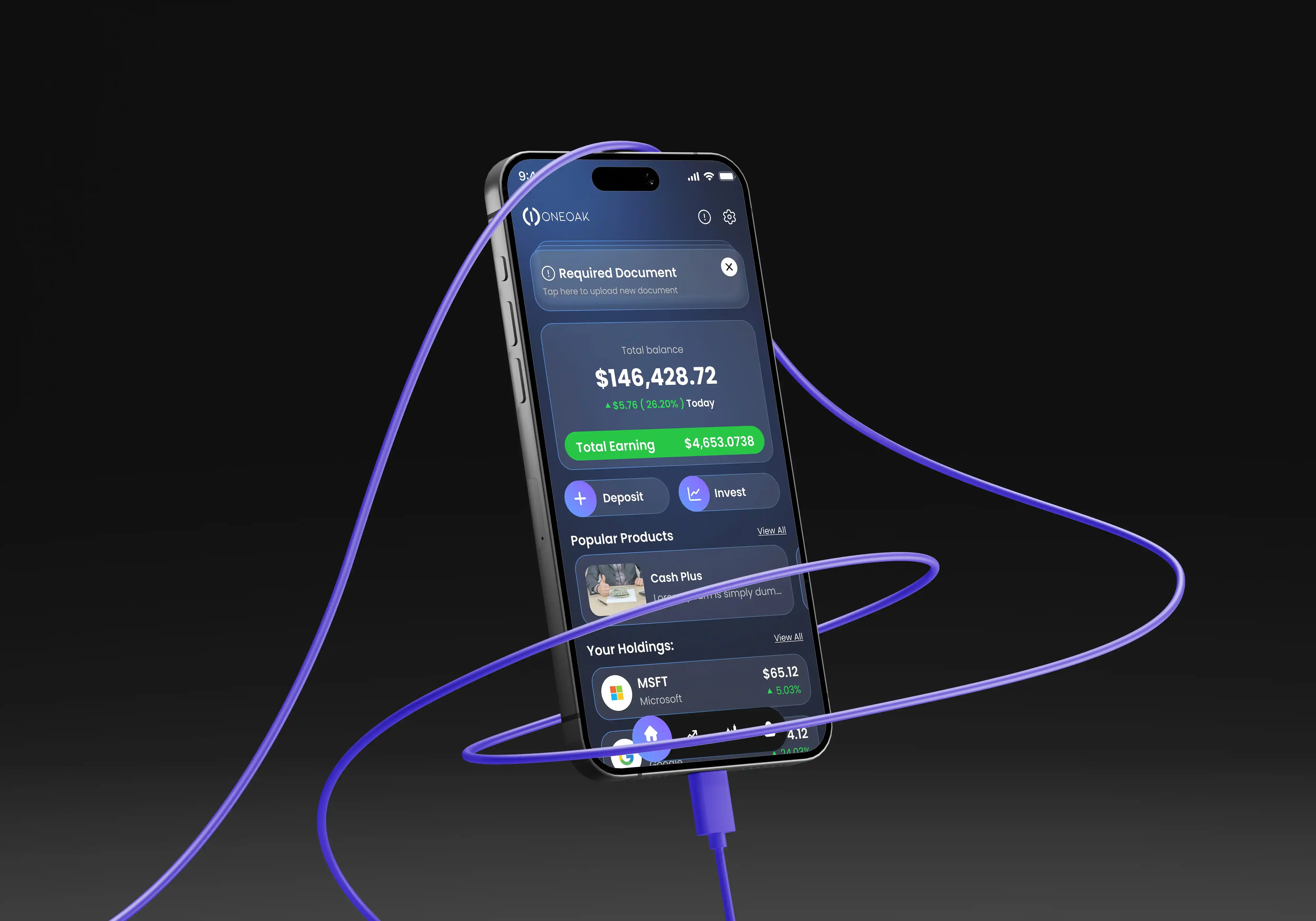
What We Delivered
The Situation
One Oak is an investment platform where the onboarding determines whether a user commits capital or abandons. The existing flow was technically complete. Every compliance requirement was met. Every field was present. And users were leaving before the end, not because the process was broken, but because it asked for more trust than it had earned.
-
High drop-off at commitment point
Users abandoned before completing onboarding. The compliance requirements were real, but the experience felt punitive. Each step asked for something without giving anything back. By the commitment point, users had received nothing that felt like value.
-
Trust deficit measured in screens
When asked to commit capital, users had not accumulated enough confidence in the platform. The gap between what the onboarding asked for and what it gave back was measurable. Every screen that took without giving widened it.
-
Information overload
Compliance-driven onboarding became a wall of forms. The forms were necessary. The wall was not. Users arrived at the investment step exhausted, not confident.
The onboarding worked for compliance. It failed for confidence. It asked users to trust the platform with their money before giving them any reason to.
The Approach
Phase 1
UX Audit and Trust Deficit Analysis
Mapped the complete onboarding journey, evaluating every screen against a single question: what does this step ask for versus what has it given?
Friction mappingEvery screen evaluated for what it requested versus what it had demonstrated. The trust deficit was not in one place. It was cumulative. Each step that asked without giving made the next step feel heavier.
Compliance-UX balance analysisIdentified which compliance requirements were genuinely sequential and which could be restructured without violating regulatory constraints. Several requirements that appeared fixed were actually flexible in their placement.
Drop-off correlationMapped abandonment patterns against the trust-ask ratio at each step. The data confirmed what the experience suggested: users did not leave at the hardest step. They left at the step where the accumulated asking exceeded their accumulated confidence.
Phase 2
Onboarding Redesign in Figma
Complete redesign with progressive disclosure and trust-building at every step. The principle: demonstrate value before requesting commitment.
Progressive trust architectureEach step builds confidence before asking for the next commitment. Security indicators, platform credibility signals, and micro-demonstrations of value woven into the flow. By the commitment step, users have already experienced enough professionalism that committing capital feels like a natural next step, not a leap of faith.
Compliance restructured as careThe same compliance requirements, presented as evidence that the platform takes the user's security seriously rather than as bureaucratic gates. The reframe changed how users felt about providing the same information.
Progressive disclosureCompliance requirements delivered in digestible stages rather than a wall of forms. Each stage small enough to feel manageable. Each transition acknowledging what the user just completed.
Trust signals throughoutSecurity indicators and platform credibility signals placed at the moments where users need reassurance most. Not clustered on one page. Distributed across the journey at the points where doubt naturally arises.
The Numbers
The redesign transformed onboarding from a compliance-driven form sequence into a confidence-building journey. The same information collected. The same regulatory requirements met. A fundamentally different experience of providing it.
Mohit's Take
"The insight was simple but the execution was not: the onboarding asked users to trust the platform with their money before giving them any reason to. We restructured so that by the commitment step, users had already experienced enough value and professionalism that the ask felt proportionate. Sequencing is everything in fintech onboarding. The same question asked at the right moment feels like care. Asked at the wrong moment, it feels like a demand. We moved three compliance steps that seemed fixed, and the entire emotional arc of the onboarding changed."
— Mohit Ramani, Founder & Lead Architect, Empyreal Infotech
Tech Stack
The toolchain behind the One Oak redesign.
Start a Conversation About Your Product
You have a fintech product where onboarding determines whether users commit or abandon. You know the compliance requirements are real. The question is whether the experience of meeting them builds confidence or erodes it.
A discovery call with Empyreal is thirty minutes. You describe the onboarding. Empyreal listens, identifies where the trust deficit lives, and tells you honestly what it would take to redesign the sequence so that compliance feels like care.