Eyda Homes
An artisan e-commerce platform where the shopping experience tells the story of where every product came from. Colour-coordinated room design, direct-from-maker positioning, and the warmth of 25 years of heritage woven into every interaction. React.js, Node.js. 4 months.
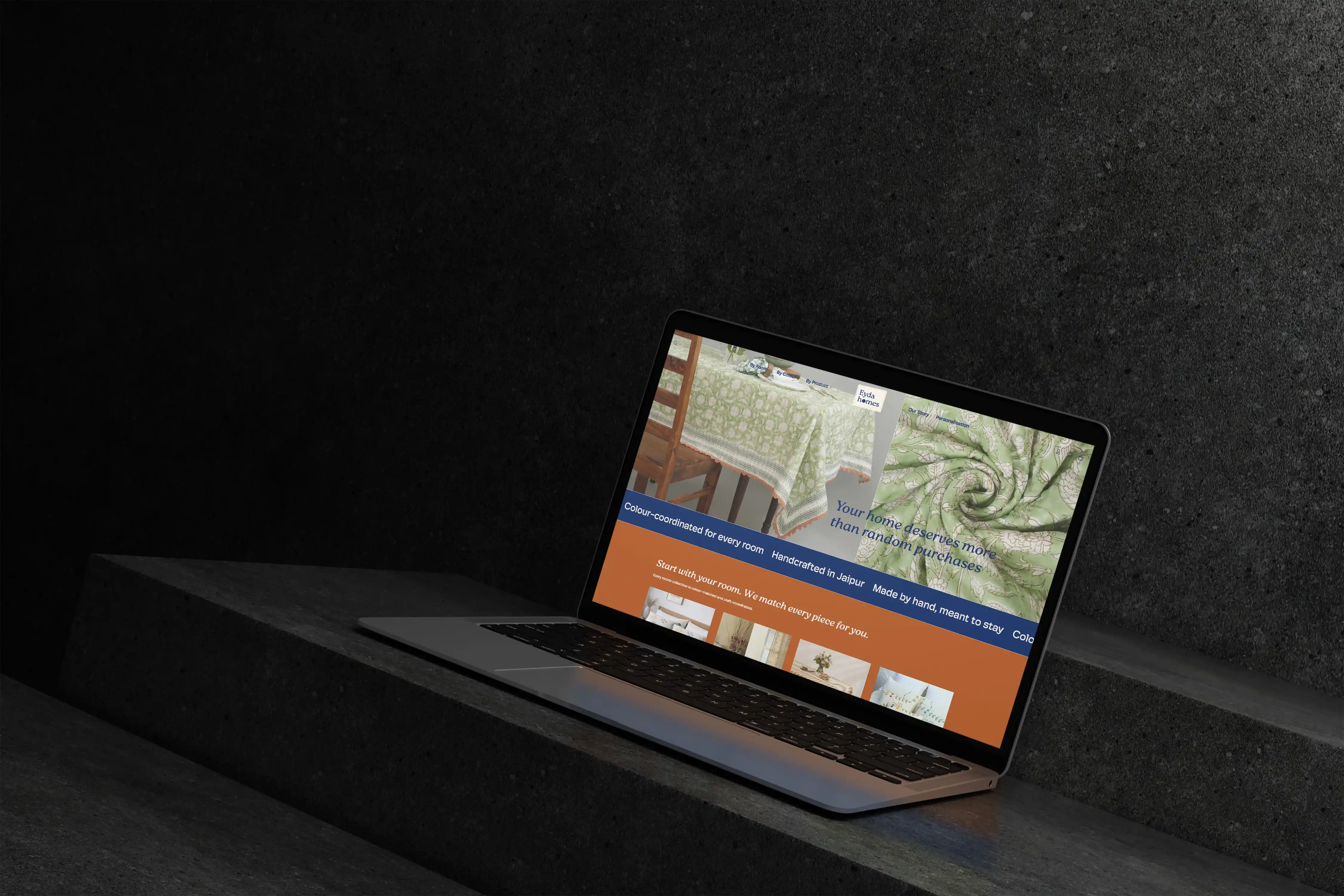
What We Delivered
The Situation
Eyda Homes is an artisan home decor brand with 25 years of heritage. Every product carries a story. Every piece is made by hands that have been practising the craft for decades. The challenge was building a digital platform that honoured that heritage without compromising the reliability and speed modern e-commerce demands.
-
Artisan authenticity versus e-commerce efficiency
The platform needed to feel handcrafted and warm while delivering the trust signals, payment reliability, and browsing speed that modern shoppers expect without thinking about it. Those two things pull in opposite directions. Template-based platforms deliver efficiency without soul. Bespoke designs deliver soul without reliability. Both had to coexist.
-
Colour-coordinated shopping is a custom UX problem
Browsing by room colour palette required UX that no standard e-commerce template provides. A buyer who wants to see products that harmonise with their living room's teal palette needs a navigation system built for that specific intent. That navigation does not exist off the shelf.
-
Direct-from-maker positioning throughout the journey
The brand story needed to be woven into the shopping experience, not isolated in an about page. A buyer should feel the maker's hands in the product photography, the descriptions, the way the product arrives. The platform had to carry that feeling from first click to checkout.
The platform needed to sell products and tell the story of where they came from. Both at the same time. Neither at the expense of the other.
The Approach
Phase 1
Heritage-Led UX Design
Every design decision started from a question: how does this make the buyer feel closer to the artisan who made the product?
Colour-coordinated navigationCustom UX allowing buyers to browse products by room colour palette. Select a colour. See products that harmonise. Build a room that feels considered. This navigation required a product tagging system and filtering architecture built specifically for colour relationships, not standard category trees.
Artisan storytelling integrated into product pagesProduct descriptions, photography direction, and page layouts designed so the maker's story is not a separate section but a natural part of discovering the product. The buyer who reads about the weaving technique used in a cushion cover feels something different from the buyer who sees dimensions and price. That feeling is the conversion advantage.
Visual language for warmth and trustDesign that communicates handcraft and quality simultaneously. Warm tones, generous spacing, photography that shows texture. The platform should feel like walking into a curated shop where someone who cares about these objects has arranged them for you.
Phase 2
React.js Frontend and Node.js Backend
React.js for a responsive, fast-loading storefront. Node.js with Razorpay integration for payment processing and order management.
React.js storefrontThe colour-coordinated filtering, product galleries, and responsive product pages built with React.js for the smooth interactions e-commerce demands. Page transitions that feel considered. Product images that load at the quality the artisanship deserves.
Node.js backend and Razorpay integrationOrder management, inventory tracking, and Razorpay payment processing delivering the transactional reliability the platform requires. A payment experience that feels as trustworthy as the products being purchased.
Content management for the teamInfrastructure allowing the Eyda Homes team to add new products, update collections, and manage the colour-coordinated catalogue without developer involvement. A seasonal collection should not wait for a code deployment.
The Numbers
Eyda Homes launched with a digital presence that honours the craft behind every product. The buyer who discovers a hand-block printed cushion feels the heritage before they read the description. The checkout that follows feels as reliable as the artisanship that preceded it.
Mohit's Take
"The first question we asked: what does the visitor need to feel in the first ten seconds? For Eyda Homes, the answer was warmth. Not the warmth of friendly copy. The warmth of walking into a space where someone who genuinely cares about beautiful objects has arranged them for your discovery. Every design decision flowed from that feeling. The colour-coordinated shopping was the most technically interesting problem, but the emotional register of the platform was the decision that made everything else work."
— Mohit Ramani, Founder & Lead Architect, Empyreal Infotech
Tech Stack
The toolchain behind the Eyda Homes platform.
Start a Conversation About Your Product
You have products with stories worth telling and a digital presence that is not yet doing them justice. The question is whether your e-commerce platform makes buyers feel the craft, or whether it treats handmade objects like inventory.
A discovery call with Empyreal is thirty minutes. You describe the products. Empyreal listens, and tells you honestly what it would take to build a platform that sells and tells simultaneously.