EnjoyTravel
A travel comparison platform built for decisions, not just listings. Curated experiences, comparison tools, and an SEO-first content architecture designed to capture travellers at the moment they are deciding, not just browsing. Webflow, WordPress. 3 months.
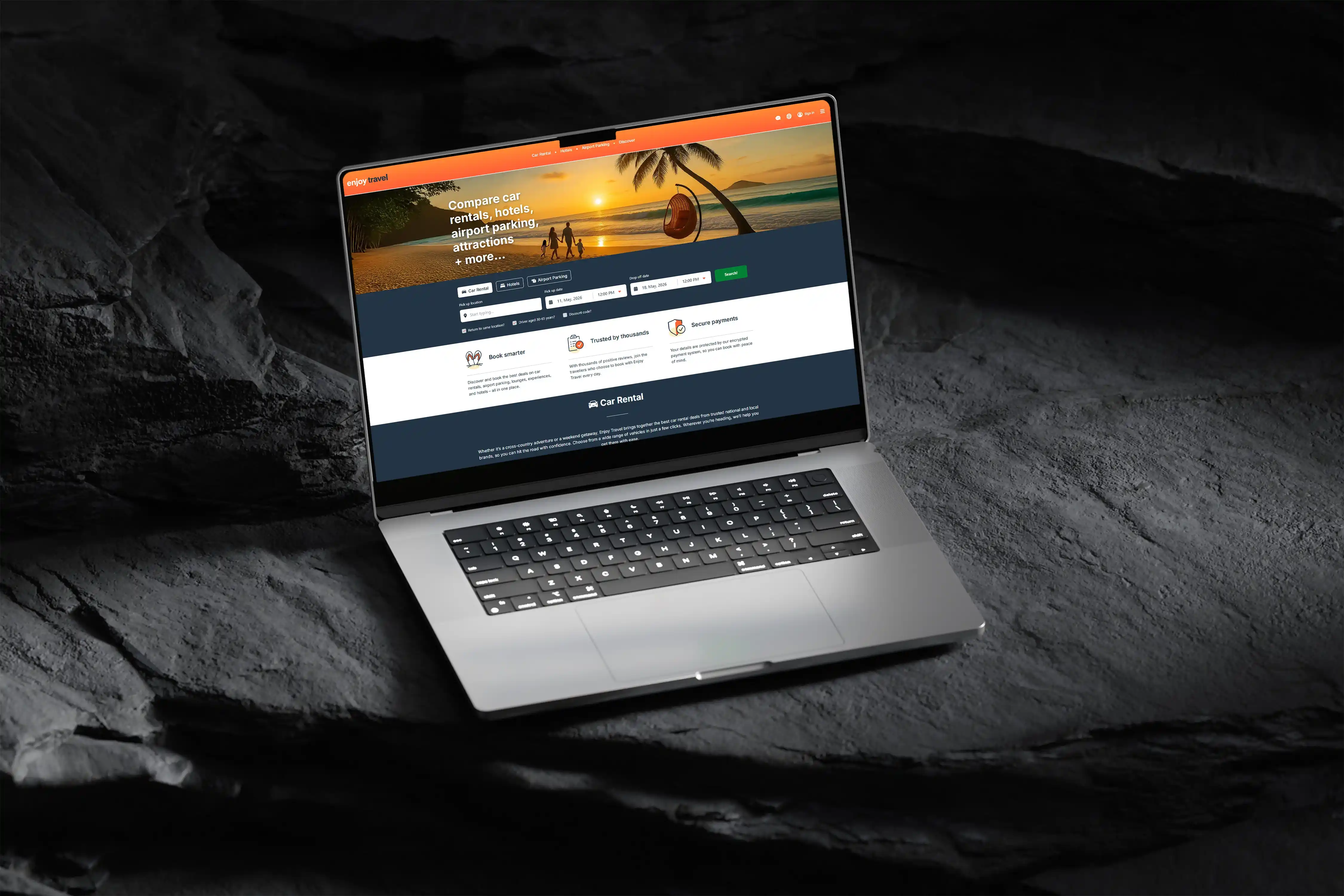
What We Delivered
The Situation
The travel comparison market has established players with massive content libraries and years of search authority. Entering that market with another listing site is entering a fight with no weapon. EnjoyTravel needed to compete on a different axis entirely.
-
Crowded market with entrenched competitors
Travel comparison has incumbents with millions of pages indexed. Matching their volume was not an option. Beating their content quality and decision architecture was.
-
Content volume without structure is noise
Destinations, experiences, comparisons, reviews. Without information architecture that guides the visitor toward a decision, content volume creates confusion, not clarity. A traveller who feels overwhelmed leaves. A traveller who feels guided decides.
-
SEO as the primary acquisition channel
In travel, organic search is the primary discovery channel. The platform needed SEO-first infrastructure from the first page published. Not as an optimisation layer applied afterward. As the foundation every content decision was built upon.
The travel market does not need another listing site. It needs better decision-making infrastructure. A platform that helps travellers decide, not just browse.
The Approach
Phase 1
Content Strategy and SEO Architecture
Before design began, Empyreal mapped the content strategy that would differentiate EnjoyTravel in a market defined by volume. The approach was quality-first: fewer pages, each one better structured, more useful, and more targeted than competing content.
Decision-first content architectureEvery content type organised around a traveller decision. Not "here is information about Bali." Rather: "you are deciding between Bali and Thailand for a two-week trip in March. Here is what matters." That reframe changed every content template.
SEO foundation from day oneURL structure, internal linking architecture, content hierarchy, and metadata templates all designed before the first page was built. The WordPress CMS configured so every new piece of content published by the team inherits the SEO structure automatically.
Comparison tools as decision infrastructureStructured comparison formats that surface the differences travellers actually care about. Not feature lists. Decision criteria. Price ranges, weather patterns, experience types, travel logistics. The comparison that helps a traveller feel confident enough to book.
Phase 2
Webflow and WordPress Build
Webflow for the primary platform experience. WordPress for the content publishing engine. Both working together to deliver performance and content management flexibility.
Webflow for design quality and speedThe primary site experience built in Webflow, delivering the visual quality and load performance that keeps a traveller engaged. In travel, every image matters. Every load time matters. A slow page about a beautiful destination undermines the beauty.
WordPress for content scaleBlog infrastructure, destination guides, comparison articles, and curated experience content managed through WordPress. The CMS configured for the EnjoyTravel team to publish without developer involvement. A travel content platform that cannot publish daily falls behind competitors who can.
Performance optimisationImage-heavy travel content optimised for load speed without sacrificing visual quality. The destination that loads slowly loses to the destination that loads quickly, regardless of which is more beautiful.
The Numbers
EnjoyTravel launched with a platform that competes on decision quality rather than listing volume. Every page helps a traveller decide. Every content template carries the SEO structure forward.
Mohit's Take
"The insight that shaped the build: travellers do not browse travel sites for fun. They browse because they are trying to decide. The moment we reframed every content type around the decision the traveller was trying to make, not the information the site wanted to present, the entire content architecture changed. Pages got shorter. Comparisons got more specific. And the SEO strategy gained focus because we stopped trying to rank for everything and started targeting the moments when a traveller was closest to booking."
— Mohit Ramani, Founder & Lead Architect, Empyreal Infotech
Tech Stack
The toolchain behind the EnjoyTravel platform.
Start a Conversation About Your Product
You are building a content platform in a competitive market. The question is not whether you can create content. The question is whether your content architecture helps users make decisions or simply adds to the noise they are already drowning in.
A discovery call with Empyreal is thirty minutes. You describe the market. Empyreal listens, and tells you honestly what a content architecture built for decisions, not volume, would look like for your platform.