CHANCE AI
A dating app rebuilt from first principles. AI-generated video profiles, consent-based matching, and a mobile experience that earns trust at first contact. 20 weeks.
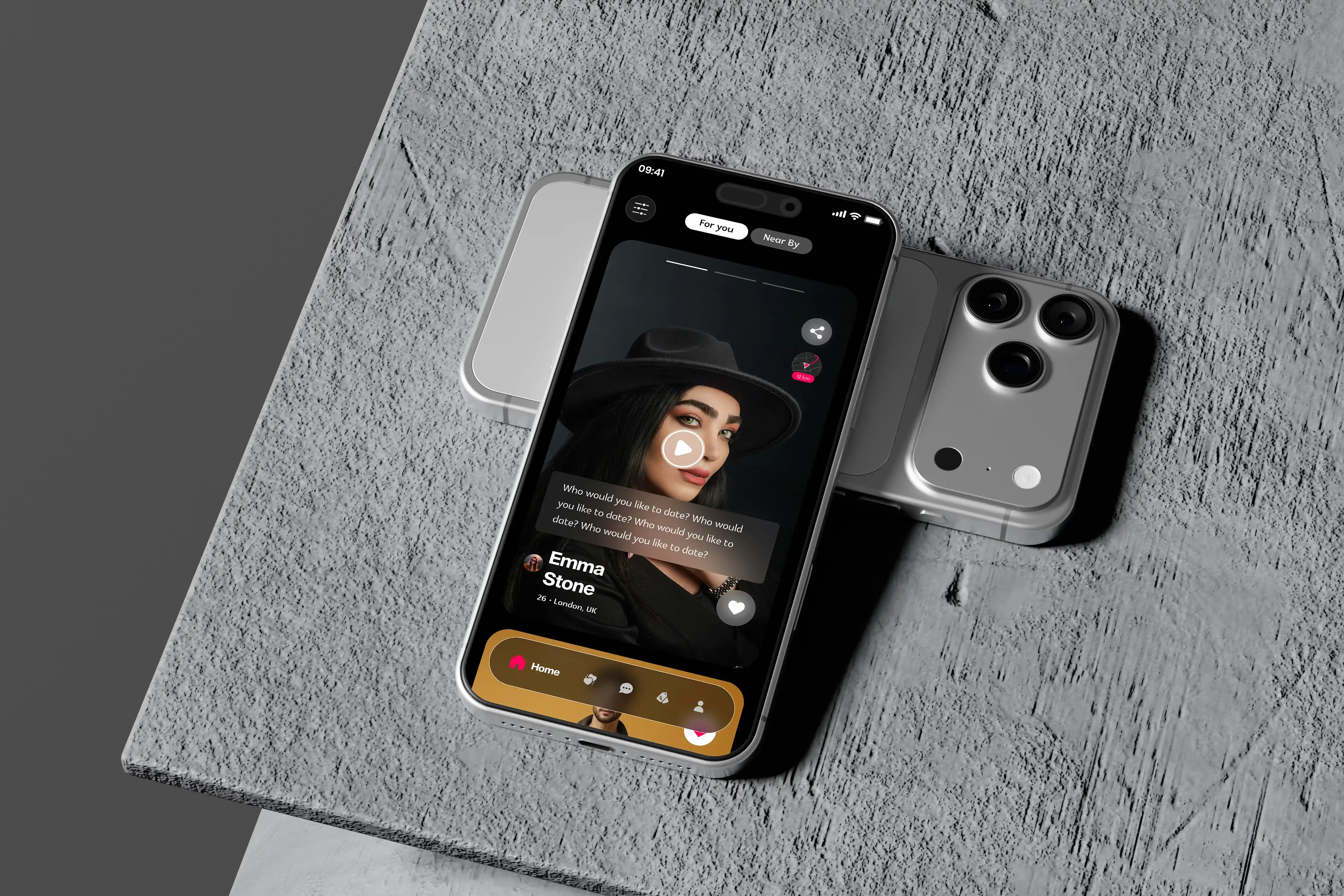
What We Delivered
The Situation
Dating apps have not fundamentally changed since 2012. The swipe mechanic reduces people to a split-second judgement. Profiles show the best possible version of someone, or a version that does not exist. The messaging layer makes meaningful conversation feel like an accident. The client behind CHANCE AI did not want to add a feature to this model. They wanted to replace it.
-
Fake profiles remain endemic
Platforms know this. Users know this. The friction of never knowing whether a person is real has become background noise in every dating app experience. Users feel it before they articulate it.
-
Low-quality matches from low-quality profiles
When the only information is a handful of photos and a two-line bio, matching logic has almost nothing to work with. It defaults to proximity and surface-level preferences. The result sounds like silence: most matches never exchange a single message.
-
Broken messaging layer
Cold messaging a stranger with no context produces stilted, formulaic interactions. Most conversations end within three exchanges. Both people sense the platform is not helping them connect.
-
No authenticity mechanism
The platform needed a profile format that communicated personality, not just appearance. Something far harder to fake than a curated photo gallery.
-
No consent architecture
The swipe model creates passive matching. The vision required both parties to actively agree before a conversation could begin, creating the kind of intentionality the current model entirely lacks.
The question had no simple answer: what would a dating app look like if it was built from scratch, without accepting any of this as inevitable?
The Approach
Phase 1
Research and UX Design
Before build began, Empyreal ran a research and UX design phase that would have been easy to rush. It was not rushed. The user flows for a consent-based dating platform are significantly more complex than they appear.
Category failure analysisExamined what existing platforms got wrong at the UX level. Where users dropped off, where trust broke down, where the gap between expectation and experience widened into the space that made people delete the app.
Consent interaction designA consent mechanism that feels like a checkbox is one that means nothing. Getting the interaction design right so that consenting felt deliberate and meaningful was a Figma problem solved before it became a development problem.
Premium UI languageThe interface was built to feel premium without feeling cold. Visual hierarchy, motion design, and profile interactions were designed to create comfort and confidence simultaneously. Users needed to feel safe before they could feel interested.
The design system established the emotional register the product needed. Every technical decision that followed served that register.Phase 2
Flutter Mobile Development
In a consumer dating app, the mobile experience is the product. There is no tolerance for a UI that feels like a compromise. Flutter delivered native performance on both iOS and Android from a single codebase.
AI video profile playbackDynamic video profiles rendered natively within the mobile experience, at the quality level required for users to feel they are genuinely encountering a person, not watching an animation.
Consent-based matching flowMutual agreement architecture embedded into the matching experience. No passive matching. No unsolicited messages. Every connection the result of a deliberate, felt decision by both people.
Polished consumer experienceNative-quality animations, transitions, and interaction patterns that compete with category leaders. Users judge dating apps by how they feel in the hand.
Phase 3
AI Video Profile Integration
The most complex part of the build. Vapi provided the capability. But integrating AI-generated video into a consumer mobile app at the required quality level, within mobile performance constraints, while ensuring output felt genuinely representative, required iteration that could not be shortcut.
Quality calibrationMultiple builds produced technically correct output that felt subtly wrong. Flat. Unconvincing. A user would have categorised it as artificial in ten seconds, destroying the product's core promise. The gap between technically functional and genuinely representative is where the real difficulty lived.
Timeline flex for qualityThe integration needed more iteration than a fixed-scope build would have allowed. Empyreal held the conversation honestly: timeline needed to flex for quality, not drift. The client heard the reasoning and trusted the judgement. That trust was earned, not assumed.
Authenticity testingExtensive testing against a single standard: would a user watching the profile feel they had genuinely encountered a person?
Phase 4
Backend Architecture and Payments
Node.js event-driven backend handling concurrent real-time interactions. MongoDB Cluster for flexible data architecture. Stripe for subscription payments.
Real-time consent engineBackend logic managing simultaneous profile views, live consent flows, and match state without the user sensing a single millisecond of processing.
MongoDB flexible data layerDocument structure accommodating varied user data, profile media, match states, and consent records across a platform where no two user journeys look the same.
Stripe subscription integrationClean integration for subscription and premium feature access with the reliability consumer apps demand.
The Numbers
CHANCE AI launched as the product that was designed. AI video profiles functioning as intended, consent architecture embedded in the matching flow, mobile experience performing natively on both platforms.
Mohit's Take
"The AI video integration was the defining technical challenge. There were builds that produced technically correct output that felt wrong. Flat. Unconvincing. A user would have categorised it as artificial in ten seconds, destroying the product's core promise. We held that conversation with the client honestly: the integration needed more time, and the reason was quality, not drift. That transparency is what separates a development partner from a vendor. The client heard it. They trusted the call. And the product launched as designed."
— Mohit Ramani, Founder & Lead Architect, Empyreal Infotech
Tech Stack
The toolchain behind the CHANCE AI app.
Start a Conversation About Your Product
You have an idea that challenges a category. You can see what the current model gets wrong. What you need is a team that will build the alternative properly, not cut corners to hit a timeline.
A discovery call with Empyreal is thirty minutes. No jargon. No pressure. An honest conversation about your product and what it would take to build it right.